The Ultimate Guide to Blocking
Stop your machine knits from curling! Discover how to block acrylic yarn for flat, professional results using the best steamers, mats, and tools.
HOW TO
Cora
12/21/20253 min read
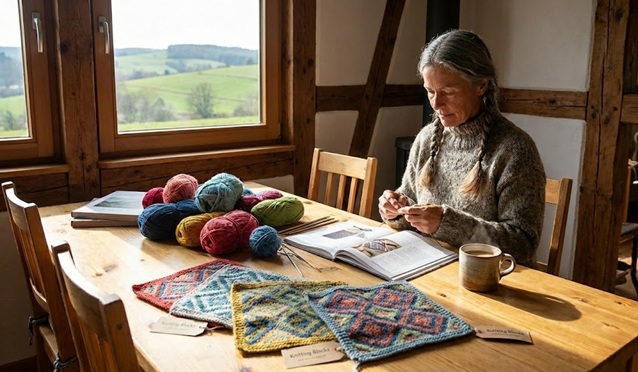
The Ultimate Guide to Blocking: How to Make Your Projects Look Handmade, Not Homemade
You have just finished cranking a beautiful scarf on your knitting machine. The colors are perfect, the stitches are even, and you are ready to show it off. You take it off the machine, and… it curls.
It doesn’t just curl a little bit; it rolls up tightly into a tube that looks more like a pool noodle than a scarf. No matter how much you flatten it with your hands, it springs right back into a roll.
This is the number one complaint among new machine knitters. The good news? You didn’t do anything wrong. This is simply the nature of stockinette stitch (the stitch your machine makes).
The secret to fixing it isn't a different yarn or a different machine. It is a finishing process called Blocking.
If you have ever wondered why store-bought knits lay perfectly flat while yours curl up, the answer is blocking. Here is how to do it and the tools you need to take your projects from "homemade" to "professional."
What is Blocking?
Blocking is the process of introducing moisture and heat to your knitting to relax the fibers.
Think of your yarn like hair. When it is knit, it is curly, frizzy, and tense. Blocking is like using a flat iron. It tells the fibers, "Stop curling, relax, and stay in this shape." It evens out your tension, makes your project slightly larger and drapier, and most importantly, it stops the dreaded curl.
The Essential Toolkit
You cannot block effectively on your bed or the carpet. You need a surface that can handle moisture and pins. Here are the three tools every pro knitter uses.
1. Interlocking Blocking Mats
You might be tempted to use a yoga mat or a towel, but you need precision.
The Product: Interlocking Foam Blocking Mats with Grid Lines.
Why you need them: These look like puzzle-piece floor mats, but they have one crucial feature: Grid Lines. When you pin down a scarf, you need to know the edges are perfectly straight. The grid lines act as a ruler, ensuring your rectangle doesn't end up looking like a trapezoid. They are thick, waterproof, and protect your floor from pins.
2. Knit Blockers (The "Comb" System)
In the old days, people used hundreds of individual sewing pins to hold a project down. This takes forever and often leaves "scalloped" edges where the yarn pulls against the single pins.
The Product: Knit Blockers (Blocking Combs).
Why you need them: These look like small plastic combs with multiple sharp pins in a row. Instead of placing one pin at a time, you can secure 3 to 5 inches of fabric in a single motion. They create a strong, straight edge with consistent tension. They cut the time it takes to block a project in half.
3. A Handheld Garment Steamer
Note: This is critical for machine knitters. Most machine knitters use acrylic yarn (like Red Heart, Caron, or Big Twist). You cannot "wet block" acrylic like you do with wool. Soaking acrylic in water does nothing because plastic doesn't absorb water.
The Product: A Handheld Garment Steamer.
Why you need it: To block acrylic, you need heat. This is called "Steam Blocking." However, if you touch a regular iron to acrylic yarn, it will melt and die instantly. A steamer allows you to hover over the fabric, shooting hot steam into the fibers to relax them without melting them. It is the only safe way to block synthetic yarn.
How to Steam Block Your Machine Knits (Step-by-Step)
Once you have your gear, the process is simple.
Pin it Down: Lay your curled scarf onto your Blocking Mats. Use the grid lines to pull it into a straight, flat shape. Use your Knit Blockers to pin the edges down aggressively. You want the fabric to be taut.
Steam it: Turn on your Steamer. Once it is hot, hover it about an inch above the yarn. Do not touch the steamer to the yarn. Move slowly over the entire project. You will visibly see the stitches relax.
The "Finger Press": After steaming a section, gently pat it with your hand (be careful, it’s hot!) to flatten it further.
Let it Cool: This is the hardest part. You must leave the project pinned until it is completely cool and dry. If you unpin it while it's still warm, the curl will return.
Final Thoughts
Blocking feels like a chore when you just want to be done, but it is the difference between a project you keep in a drawer and a project you sell or gift with pride.
A curled scarf looks unfinished. A blocked scarf looks like it came from a boutique. The investment in a set of mats and a steamer pays off the very first time you see your work laying perfectly flat.
Ready to flatten that curve? Check out the links above for the best blocking gear on Amazon.
Contact
hello@crochetmachines.com
© 2025. All rights reserved.