The Addi Express King Size Review: An Honest Look for the Busy and Slightly Impatient Stitcher
Is this expensive German Addi Express King Size gadget a game-changer for your crafting life, or just an overpriced toy? Let’s crank out some answers.
REVIEWS
Caro
12/20/20255 min read
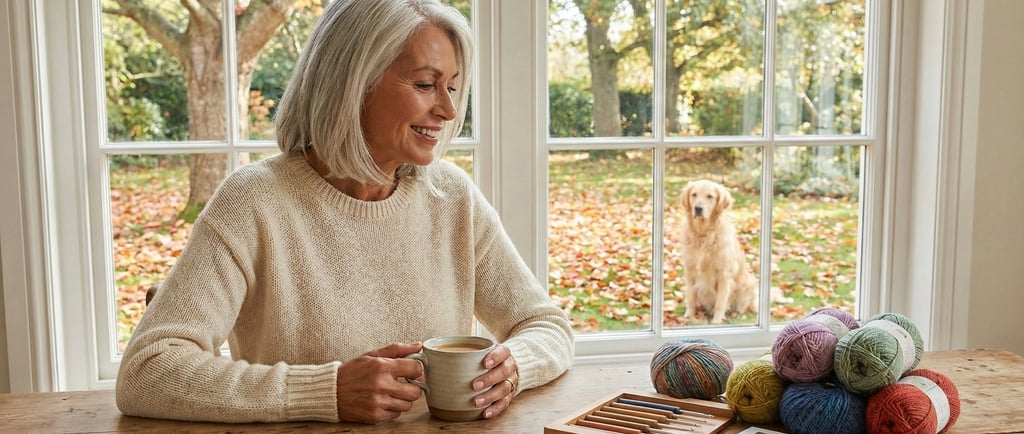

The Addi Express King Size Review: An Honest Look for the Busy and Slightly Impatient Stitcher
Let’s be honest with each other. We love yarn. We love the idea of handmade gifts. But somewhere between managing a household, perhaps a career, trying to stay active, and just general adulting, the time available to sit and knit an entire Afghan stitch by stitch has vanished.
Furthermore, if you’re anything like me, your hands aren’t quite what they used to be. A few hours of crochet hooks or knitting needles now results in stiff wrists and complaining thumbs the next day.
Enter the Addi Express King Size knitting machine.
You’ve probably seen the videos on social media: someone effortlessly cranking a handle, producing a perfect beanie in 20 minutes flat. It looks like magic. It looks like a time-saver. It also looks shockingly expensive for a plastic device.
I took the plunge a few months ago. As someone squarely in middle age who values quality tools but is skeptical of gimmicks, I wanted to know if this machine could reignite my crafting mojo without aggravating my arthritis.
Here is an in-depth, no-nonsense review of the Addi Express King Size, written specifically for those of us who want results without the repetitive strain injury.
What Exactly Is It?
The Addi Express King Size is a domestic circular knitting machine. It is not a crochet machine (though crocheters often use it to speed up parts of their projects, like blanket borders or amigurumi bodies). It uses actual latch needles to knit stockinette stitch in a tube or a flat panel.
It is proudly made in Germany. The "King Size" boasts 46 needles, which means the tubes it creates are wide enough to fit an average adult head. They make a smaller version (22 needles), but if you want to make hats for anyone over the age of five, you need the King Size.
First Impressions: The German Engineering
When you unbox the Addi, the first thing you notice is the price tag’s justification.
I have tried the cheaper, knock-off plastic machines found online. They feel rickety, they jam constantly, and they sound like a bag of wrenches in a blender.
The Addi is different. Yes, it is mostly plastic, but it is heavy, dense, high-quality ABS plastic. It feels substantial. When you turn the crank, it’s relatively smooth and quiet. It feels like a tool meant to be used, not a toy meant to break after three uses. It comes with replacement needles, clamp feet to secure it to a table, and basic tools.
The Learning Curve: Is it Really "Out of the Box" Ready?
Yes and no.
The marketing suggests you can open the box and have a hat in 30 minutes. If you are incredibly lucky, that might happen. But realistically? Give yourself an afternoon of frustration first.
Casting On: This is the gatekeeper. You have to weave the yarn in and out of the needles for the first round. Do it too tight? It jams. Too loose? You drop stitches immediately. It took me four tries to get a clean cast-on.
The Rhythm: Once you are going, it is mesmerizing. You just turn the crank. But you need to maintain an even, medium pace. Crank too fast like a crazed organ grinder, and you will drop stitches. Fixing a dropped stitch on this machine is possible, but it is finicky and annoying.
The learning curve isn't steep, but it requires patience. Don't use your expensive merino wool for your first three attempts. Use cheap acrylic until you get the feel for the tension.
The Realities of Daily Use
After several months of cranking out hats, scarves, and blanket panels, here are the key takeaways:
1. The Speed is Addictive
This is why you buy it. I can knit a perfectly tensioned adult beanie in about 35 minutes, start to finish (including cinching the ends). If I were hand knitting that, it's an 8-hour project minimum. If you want quick gifts or want to sell items at craft fairs, the speed is absolutely revolutionary.
2. Yarn Snobbery (The Machine, Not You)
This is the most crucial point in this entire review: The Addi is incredibly picky about yarn.
It thrives on standard DK (Double Knitting) or Worsted weight yarns (categories 3 and 4). Smooth acrylics, superwash wools, and cotton blends work beautifully.
It hates novelty yarns. Eyelash yarn, bouclé, or anything highly textured will snag and cause tears.
It struggles with bulky yarn. True chunky yarn is too thick for the needle hooks and will jam the machine, potentially damaging it.
It dislikes very thin yarn. Lace or sock weight yarn works, but the resulting fabric is very loose and web-like unless you double up strands.
You will spend time figuring out which yarns in your stash "Addi likes."
3. The Counter Conundrum
The machine has a little digital row counter. It is notoriously temperamental. Sometimes it counts perfectly. Sometimes it decides to take a nap in the middle of a project.
Many users (myself included) buy a cheap magnetic digital counter online and stick it to the side as a backup. For the price of the machine, the built-in counter should be infallible, and it isn't.
4. Flat Panels vs. Tubes
90% of the time, you will use this in circular mode (tubes) for hats, cowls, and socks.
It does have a switch for flat panels (knitting back and forth). This allows you to make wider scarves or squares to sew together for Afghans. However, the edges of flat panels on knitting machines tend to curl fiercely and can be tricky to keep neat. It works, but the machine truly shines in circular mode.
The Ergonomics: A Middle-Aged Perspective
This was my main motivation for buying. Does it save the hands?
Absolutely. My wrists and fingers do almost zero work. The motion is entirely in the shoulder and elbow as you turn the crank.
However, a word of warning: If you don't clamp the machine down securely, you will use your non-cranking hand to hold the machine steady, which leads to tension in your neck and back. Clamp it down tight to a solid table. If you do that, it is a wonderfully ergonomic experience compared to traditional needlework.
The Verdict: Pros and Cons
The Pros:
Incredible Speed: You can finish projects in an evening that used to take weeks.
Saves Your Hands: Excellent for those with arthritis, carpal tunnel, or repetitive strain issues.
Perfect Tension: If the yarn is right, the stitches are machine-perfect every time.
Build Quality: It’s sturdy and built to last if cared for.
Great for Charity/Gifts: You can churn out donations or stocking stuffers rapidly.
The Cons:
The Price: It is a significant investment.
Yarn Picky: It doesn't work with everything in your stash.
Limited Stitch Types: It only does stockinette. No cables, no lace, no garter stitch. (Though you can manipulate stitches manually, it defeats the purpose of the speed).
The Row Counter: It’s unreliable.
Fixed Gauge: You cannot change the needle size. You get what you get.
Final Thoughts: Is it Worth the Investment?
The Addi Express King Size is a specialized tool.
If you are a process knitter—someone who deeply enjoys the slow, meditative click-clack of needles and the intricate dance of complex stitch patterns—you will likely find this machine boring. It removes the "craft" element and replaces it with production.
However, if you are a results-oriented crafter, someone who wants a finished blanket without spending six months on it, or someone whose hands can no longer keep up with their creative brain, this machine is a godsend.
For me, it hasn't replaced hand knitting or crocheting. Instead, it has become a partner tool. I use the Addi to crank out the main body of a sweater, and then I hand-knit the ribbed cuffs and collar. I use it to make a quick pile of hats for charity, saving my hands for a more complex lace shawl project.
It is expensive, yes. But time is also expensive. And the ability to create without pain? That’s priceless. If you can afford the initial outlay and you have the patience to learn its quirks, the Addi Express is a worthy addition to your craft room.
Contact
hello@crochetmachines.com
© 2025. All rights reserved.