An Honest Review of the Sentro 48 Crochet Machine for the Modern Hobbyist
Sentro 48 vs. Addi Express: Is the cheaper machine worth it? We reviewed the pros, cons, and best yarns to help you decide which knitter to buy.
REVIEWS
Stanley
12/20/20255 min read
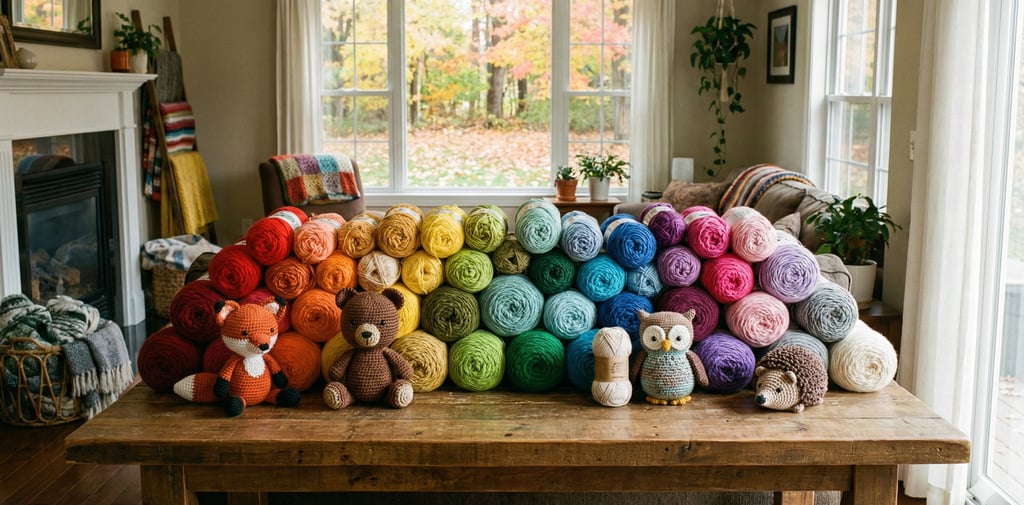
An Honest Review of the Sentro 48 for the Modern Hobbyist
If you have spent any time on Pinterest or YouTube lately, you have likely seen a mesmerizing pink and white plastic cylinder churning out hats in under twenty minutes. They are often tagged as "crochet machines," but let’s clear the air right away: The Sentro 48 is a circular knitting machine.
Does it matter what we call it? Not really. What matters is what it does.
For those of us in the middle of life—perhaps managing arthritis, looking for a way to bust through a massive yarn stash, or wanting to knit for charity without spending three weeks on a single scarf—the Sentro 48 is an alluring gadget. It promises the joy of fiber arts without the repetitive strain of hand needles or hooks.
But is it a miracle tool or just a plastic toy? I’ve dug deep into the mechanics, the quirks, and the yarn requirements to give you a brutally honest review of the Sentro 48.
What Exactly Is It?
The Sentro 48 is a crank-operated circular knitting loom. It features 48 latch hooks (needles) arranged in a circle. As you turn the handle, the machine feeds yarn onto the hooks, creating knit stitches automatically.
It has two modes:
Tube Mode (T): This knits in a continuous spiral. It is perfect for hats (beanies), cowls, neck warmers, and tube scarves.
Panel Mode (P): This knits back and forth to create a flat sheet of fabric. This is used for blankets (by sewing panels together) or sweaters, though it is significantly finickier to master.
Why the "48"? Sentro makes smaller machines (22 and 40 needles), but the 48-needle version is the only one suitable for adult-sized hats. The smaller ones are strictly for children’s hats or scarves.
The "Arthritis Factor": Is It Easier on the Hands?
One of the biggest selling points for those of us over 40 is ergonomics. If you have carpal tunnel, arthritis, or just general wrist fatigue, hand knitting or crocheting for hours is often off the table.
The Good:
Shoulder & Wrist Relief: The motion is a rotational crank, utilizing your whole arm rather than tiny, repetitive wrist flicks. It is vastly superior for preventing repetitive strain injury (RSI).
Speed: You can finish a hat in 20–30 minutes. This means you can feel the satisfaction of a finished project without the multi-day physical toll.
The Bad:
The Grip: The crank handle is small and made of hard plastic. If you have severe grip issues, holding the small knob can become tiresome. Pro Tip: Many users buy 3D-printed "crank adapters" that allow you to use a cordless drill to turn the machine, completely eliminating the need to crank by hand.
Fiddly Setup: While the cranking is easy, "casting on" (threading the yarn through the needles for the first row) and "casting off" (removing the project) requires manual dexterity and a tapestry needle. You will still need to use your fingers for the finishing touches.
The Elephant in the Room: Sentro 48 vs. The Addi Express King Size
You cannot talk about the Sentro without mentioning its German rival, the Addi Express King Size.
Is the Addi three times better? Yes and no. The Addi is smoother, heavier, and less prone to skipping stitches. It feels like a tool; the Sentro feels like a toy. However, for a hobbyist who just wants to make gifts for grandkids or donate hats to shelters, the Sentro is the better value. You can buy three Sentros for the price of one Addi. If you are just starting out, buy the Sentro. If you eventually start a business selling hundreds of hats, upgrade to the Addi.
The Golden Rule: Yarn Choice Matters
This is where most beginners fail. You cannot just throw any skein of yarn into the Sentro and expect perfection. The machine is picky.
The Sweet Spot: You want a Worsted Weight (Size 4) yarn, but it must be on the thinner/softer side of worsted.
Best Yarns:
Lion Brand Heartland: Works like butter.
Caron Simply Soft: Excellent, slick texture that glides easily.
Big Twist (JoAnn’s brand): Usually very reliable.
The "Danger" Yarns:
Red Heart Super Saver: This is often too rough and thick. It can cause the gears to grind, loud cracking noises, and even snapped handles.
Cotton Yarn: Avoid it. Cotton has no stretch (elasticity). The machine relies on the yarn stretching slightly to pop off the needles. Cotton will jam your machine instantly.
The Learning Curve: It’s Not Just "Turn and Go"
Marketing videos make it look effortless, but there are quirks you must master to avoid the dreaded Dropped Stitch—a hole in your fabric caused by the machine failing to catch the yarn.
1. The First Three Rows are Critical
When you start a project, you must crank slowly and carefully for the first three rotations. Check every single needle to ensure it caught the yarn. If you speed through the start, your hat will unravel before you even finish.
2. Tension is Everything
The Sentro comes with a plastic tension guide, but many users find it inadequate.
Loose tension: The stitches look sloppy.
Tight tension: The machine makes loud clicking sounds and stitches drop.
The Fix: You will eventually learn to hold the yarn with your hand to manually control the tension as it feeds into the machine. It takes practice, but it yields the best results.
3. The "Suction Cup" Struggle
The machine comes with suction cups to hold it to the table. They are terrible. They rarely stick for long.
The Fix: Use a silicone placemat underneath, or buy C-clamps from the hardware store to physically clamp the legs to your table. If the machine wobbles while you crank, your tension will fluctuate, and your knitting will look uneven.
Common Annoyances (And How to Fix Them)
The Row Counter Stops Working: The digital counter on the Sentro is notorious for breaking or falling asleep mid-project.
Solution: Buy a cheap manual tally counter (the kind bouncers use) or download a row-counter app on your phone. Do not rely on the built-in screen.
Static Electricity: Plastic machine + acrylic yarn + dry winter air = Static. This causes the yarn to cling to the machine and drop stitches.
Solution: Tape a dryer sheet near the yarn feeder, or wipe the machine down with a dryer sheet before starting.
The Verdict: Is It Worth It?
If you go into this expecting a professional-grade industrial textile machine, you will be disappointed. It is made of plastic, it makes a bit of noise, and it requires patience to find the right yarn.
However, if you approach it as a fun, affordable tool to accelerate your crafting, it is absolutely worth the $60.
It is particularly magical for:
Last-minute gifts: Forgot a birthday? You can make a beanie in 30 minutes.
Charity knitting: You can churn out 50 hats for a homeless shelter in a couple of weekends.
stash busting: It eats up yarn cakes rapidly.
Final Score: 4/5 Stars (Points deducted for the terrible suction cups and the learning curve on yarn tension.)
The Bottom Line: Don’t be afraid of the "plastic toy" look. With a skein of soft yarn and a little patience, the Sentro 48 is a powerful addition to any crafter's arsenal. Just remember: it’s a knitting machine, no matter what the search results tell you!
Contact
hello@crochetmachines.com
© 2025. All rights reserved.